Daily Living Aids: A Room-by-Room Guide to Easier Days at Home
Daily living aids, also called aids for daily living, are simple tools that make everyday tasks such as dressing, cooking, eating and washing easier and less tiring. They range from low-cost items like jar openers to more complex equipment such as shower chairs.1 This guide goes room by room, explains what each aid helps with, and shows when an occupational therapist can help you choose.
Key points
- Start with the task that is hardest or most tiring, not with a shopping list.
- Simple aids such as button hooks, sock aids and easy-grip cutlery can reduce bending, reaching and gripping.
- Grab rails need to be fixed properly. Taps and towel rails are not built to hold your weight.
- An occupational therapist can assess your needs, and funding may be available through My Aged Care or the NDIS.
Start with the task that is hardest
An assistive device is any piece of equipment that helps you do the daily tasks you need or want to do.2 The best aid is the one that solves a real problem in your day, so start by noticing which tasks are painful, slow or tiring.
- Is it bending, reaching, gripping, standing for long, or getting up and down?
- Which room does it happen in, and at what time of day?
- Is there a simpler way to do the task, such as moving things within reach or taking short breaks?2
Dressing aids
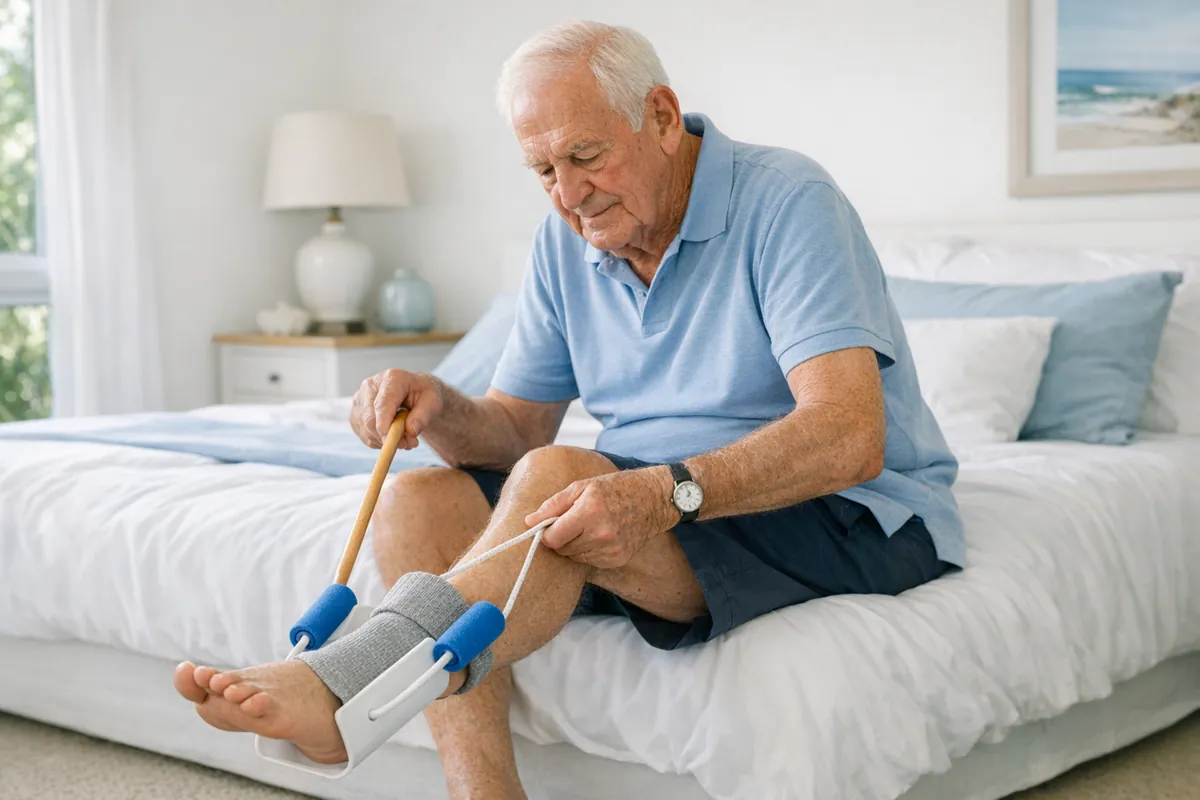
Dressing aids help with buttons, zips, socks, stockings and shoes, so you can dress with less bending and fine finger work.2
- Button hook and zip puller: a wire loop pulls buttons through, and a hook catches small zip tabs.
- Sock aid: you load the sock onto a flexible cradle, then pull it on with the handles, so you bend less.
- Long shoe horn or dressing stick: helps with shoes and pulling on or taking off clothes when reaching is hard.
- Sit down to dress, on a firm chair or the edge of the bed, with your clothes laid out within reach.
Dressing aids in our online shop
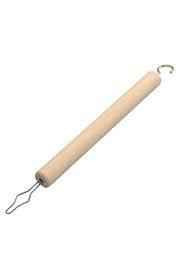 Button Hook and Zip PullerTimber handle with a wire button loop at one end and a zip hook at the other.View product →
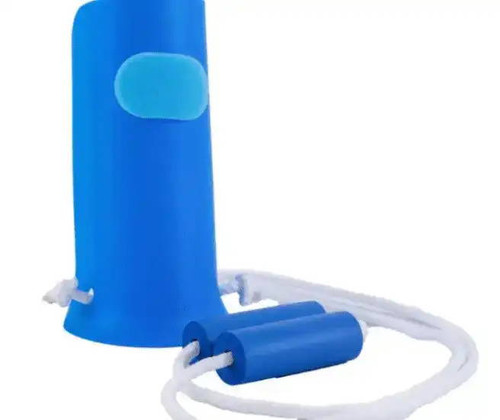 Sock Aid with Foam HandlesFoam handles on looped straps, with a flexible cradle that bends with the sock.View product →
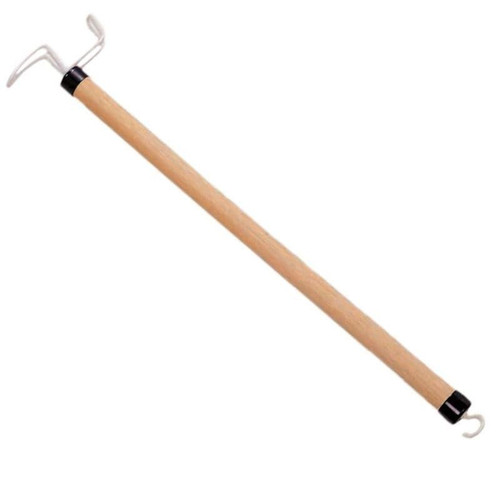 Deluxe Dressing Stick 27"69 cm wooden dressing stick with a C hook and a push-pull hook.View product →
Kitchen and mealtime aids
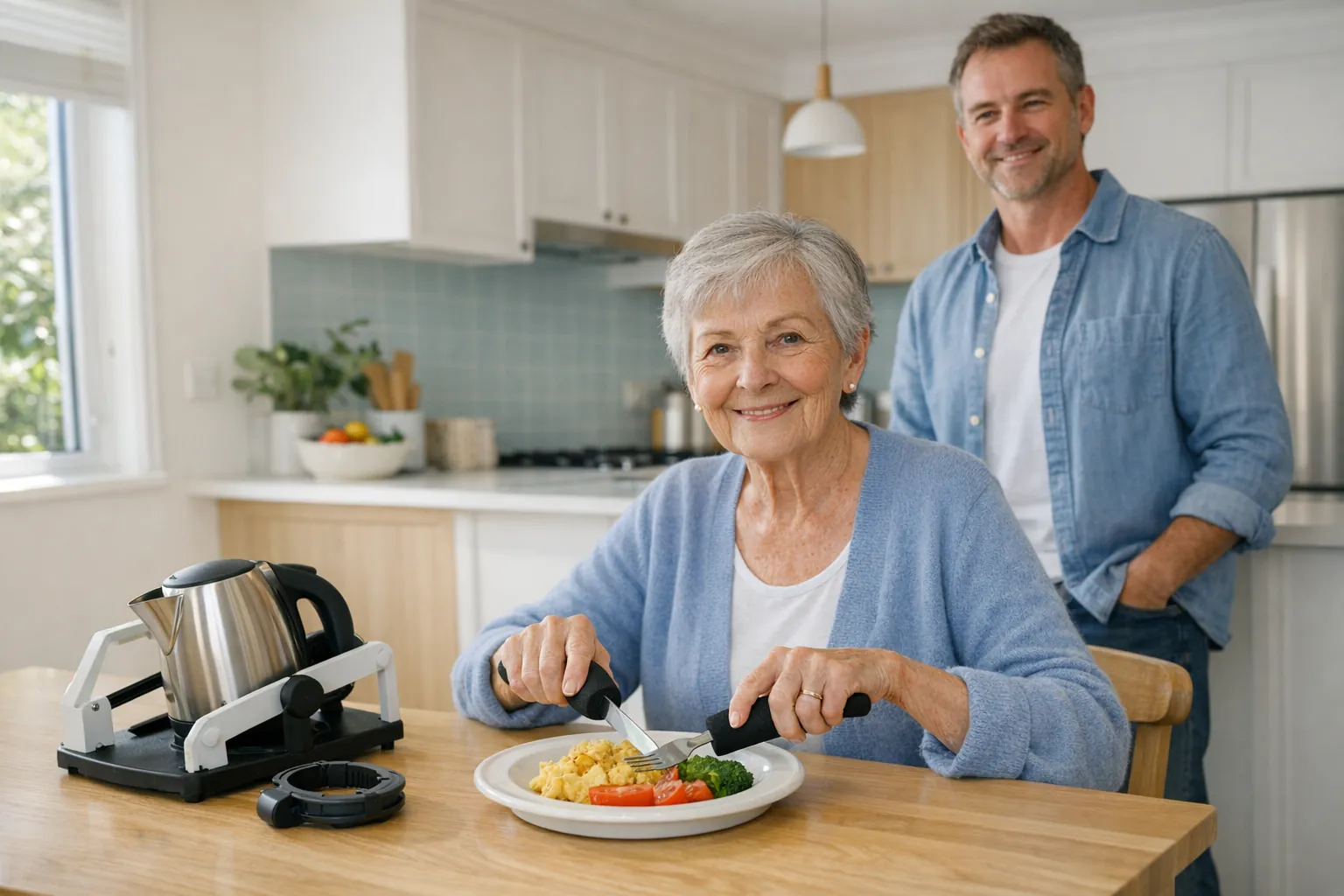
Store the things you use most where they are easy to reach, between hip and eye level, and use a trolley to move items around safely.3 Lighter pots, pans and crockery are easier to lift.2
- Easy-grip or adapted cutlery: thicker, softer handles are easier to hold when your grip is weak or painful.2
- Jar, bottle and tap turners: give extra grip and leverage on lids and taps.
- Scoop plates and plate surrounds: a raised edge helps push food onto a fork or spoon, which is useful if you eat with one hand.
- Non-slip mats: stop plates and bowls sliding on the table or bench.2
Kitchen and mealtime aids in our online shop
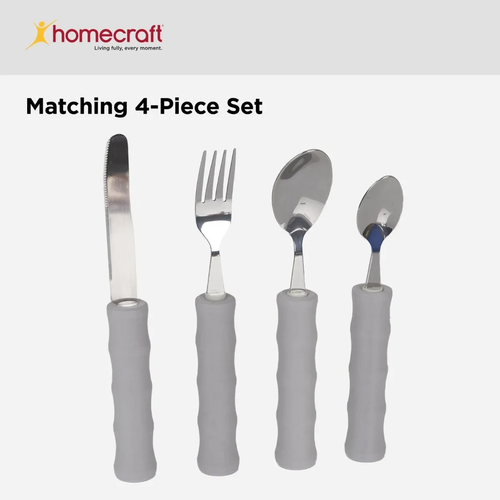 Lightweight Foam Handled Cutlery by HomecraftFoam-handled stainless steel cutlery in standard, angled and one-handed styles.View product →
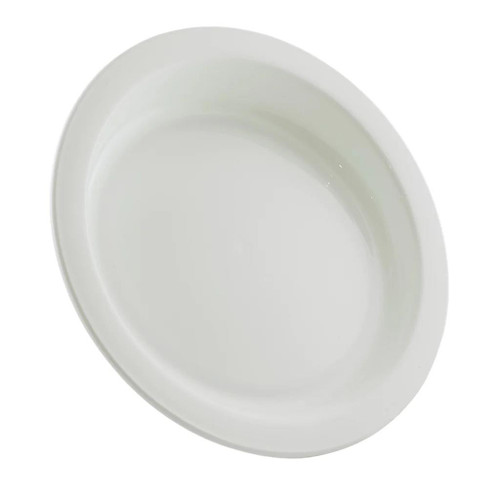 Scoop Plate Hi-Lo 228mm White228 mm plate with a low entry wall and a high rim for scooping.View product →
 Incurve Plate Surround by HomecraftClip-on surround for flat plates up to 250 mm across.View product →
 Jar, Bottle & Tap TurnersSet of three soft-grip turners for jars, bottles and taps.View product →
Bathroom and toilet aids
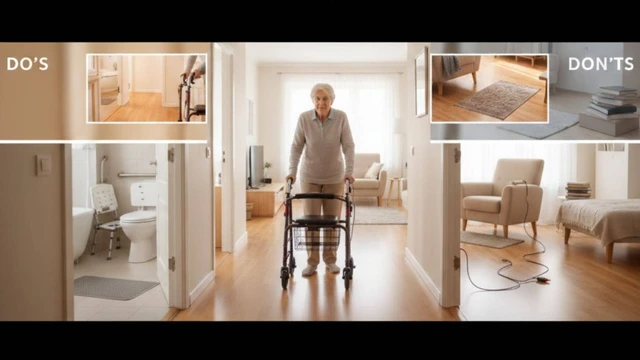
Wet floors make the bathroom a common place to slip. Non-slip mats or strips, a shower stool and a hand-held shower can all help.3 A long-handled sponge reduces bending and reaching when you wash.2
- Taps and towel rails are not designed to hold a person's weight. Grab rails, fitted properly, give reliable support.3
- An occupational therapist can advise where grab rails should go in your bathroom.3
- Do not use a plastic garden stool or chair in the shower. They are not slip resistant or made for hot water and soap, and can slide or collapse.3
- Toilet seat raisers and rails beside the toilet can make sitting and standing easier.2
- Keep toiletries within easy reach, for example in a shower caddy.3
See our bathroom aids range for shower chairs, stools and over-toilet aids.
Bedroom and getting up from a chair
Getting in and out of bed is easier when the bed is the right height and the mattress is firm enough to support you. A safe way to get up is to roll onto your side, sit up, and wait for any dizziness to settle before you stand.3
Chairs that are higher, with solid armrests, are easier to get out of than low chairs or couches.3 If getting on or off the bed is hard, talk to your doctor, an occupational therapist or a community nurse.3
Getting advice and funding
An occupational therapist can suggest products and other ways to make tasks easier, and an Independent Living Centre can show you options to try.2
- Aged care: equipment and products, from jar openers to wheelchairs and shower chairs, can be provided through the Commonwealth Home Support Program or Support at Home after an aged care assessment. More complex items need advice from a suitably qualified health professional.1
- NDIS: if you are an NDIS participant, ask your planner or support coordinator how aids fit your plan.
- Buying privately: many simple aids are low cost. Check the size, weight limit and instructions before you buy.
Frequently asked questions
What are daily living aids?
Do I need an occupational therapist to buy daily living aids?
Can I get daily living aids funded?
Is a bed stick safe?
Want to try before you buy?
Visit our mobility team at 621 Stafford Road, Stafford, to see daily living aids in person.
Shop daily living aidsFind our store
Written by
SuperPharmacyPlus Mobility TeamMobility equipment team, SuperPharmacyPlus StaffordOur mobility team helps customers, carers and therapists choose, set up and look after mobility aids, in store at Stafford and through our online shop.
References
- Equipment and products, My Aged Care, Australian Government (accessed 25 November 2026)
- Living smarter with arthritis: daily living aids, Arthritis Australia (The Arthritis Movement) (accessed 25 November 2026)
- How to Stay On Your Feet checklist, Queensland Health (accessed 25 November 2026)
- Position statement: bed sticks, poles and rails, Occupational Therapy Australia (accessed 25 November 2026)
- Falls prevention: Bed rail equipment installation and safe use, Clinical Excellence Commission (NSW Health) (accessed 25 November 2026)
Keep reading

← Back to Health & Mobility Advice
This article is general information only and is not a substitute for advice from your pharmacist, doctor or other health professional about your own situation.
Recent Posts
-
Nov 25, 2026
Insulin Cooler Bags and Travel Cases: Summer Storage for Diabetes Supplies
An insulin cooler bag helps keep insulin out of the heat on hot days, but it works best as part of … -
 Nov 25, 2026
Choosing a Walking Frame: A Guide for Older Adults and Carers
Choosing a walking frame comes down to three things: how much support you need, where you will use … -
Nov 09, 2026
Can you use human shampoo on dogs?
For routine baths, choose a suitable dog-specific shampoo. The Australian Veterinary Association a …