Insulin Cooler Bags and Travel Cases: Summer Storage for Diabetes Supplies
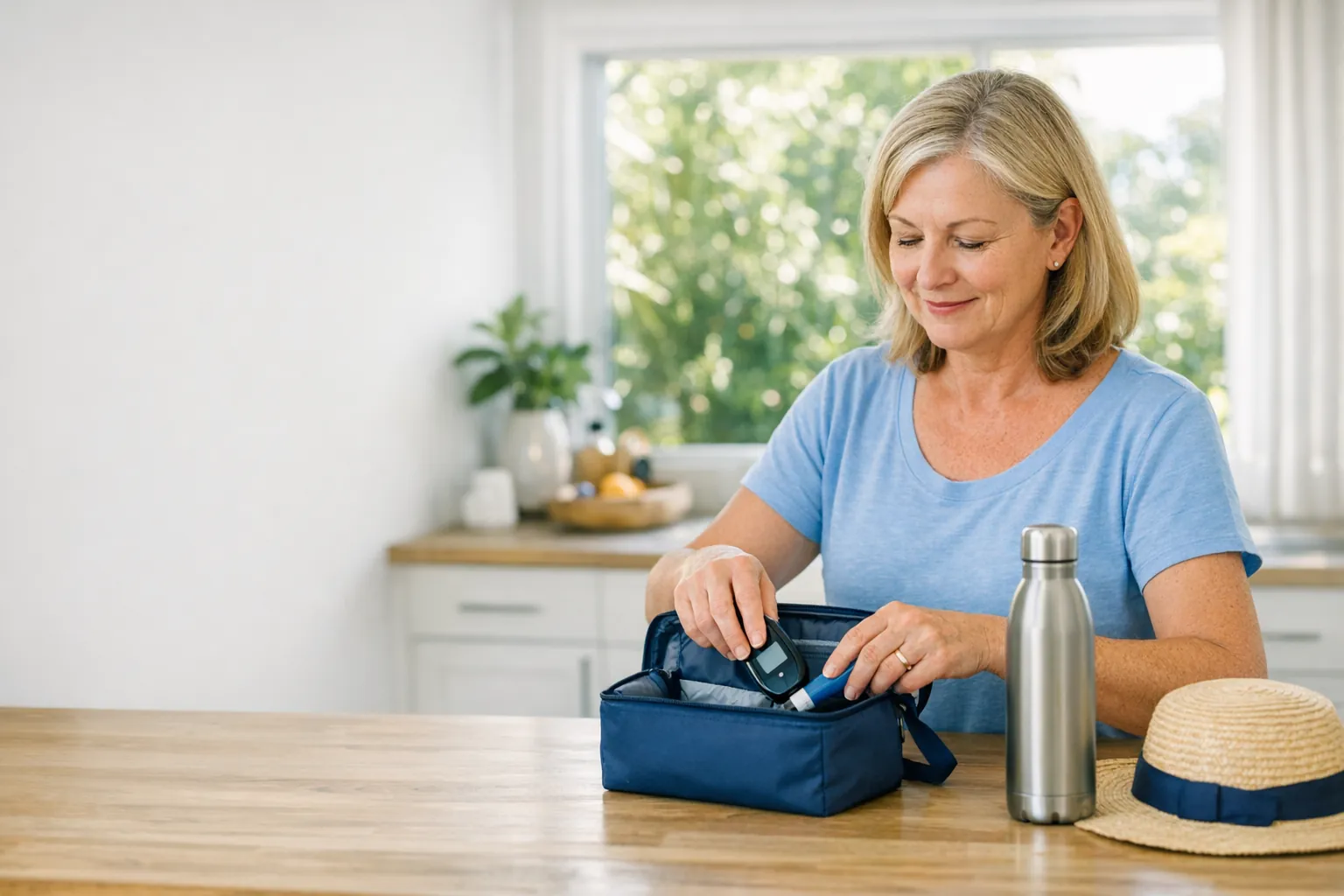
An insulin cooler bag helps keep insulin out of the heat on hot days, but it works best as part of a simple plan: follow your product's storage instructions, keep supplies out of cars and direct sun, and never let insulin sit directly on ice.1
Key points
- Check the storage instructions for each medicine and device you use, because they differ between products.
- Keep unopened insulin in the fridge, away from the freezer, and keep in-use insulin out of the heat.
- Carry insulin in a cooler bag on hot days, and never place it directly on ice or an ice brick.
- Do not leave insulin, meters or test strips in a parked car or in direct sun.
- If something has been too hot or frozen, ask your pharmacist before you use it.
 By SuperPharmacyPlus Pharmacist Team
Updated · 5 min read
Start with your product's instructions
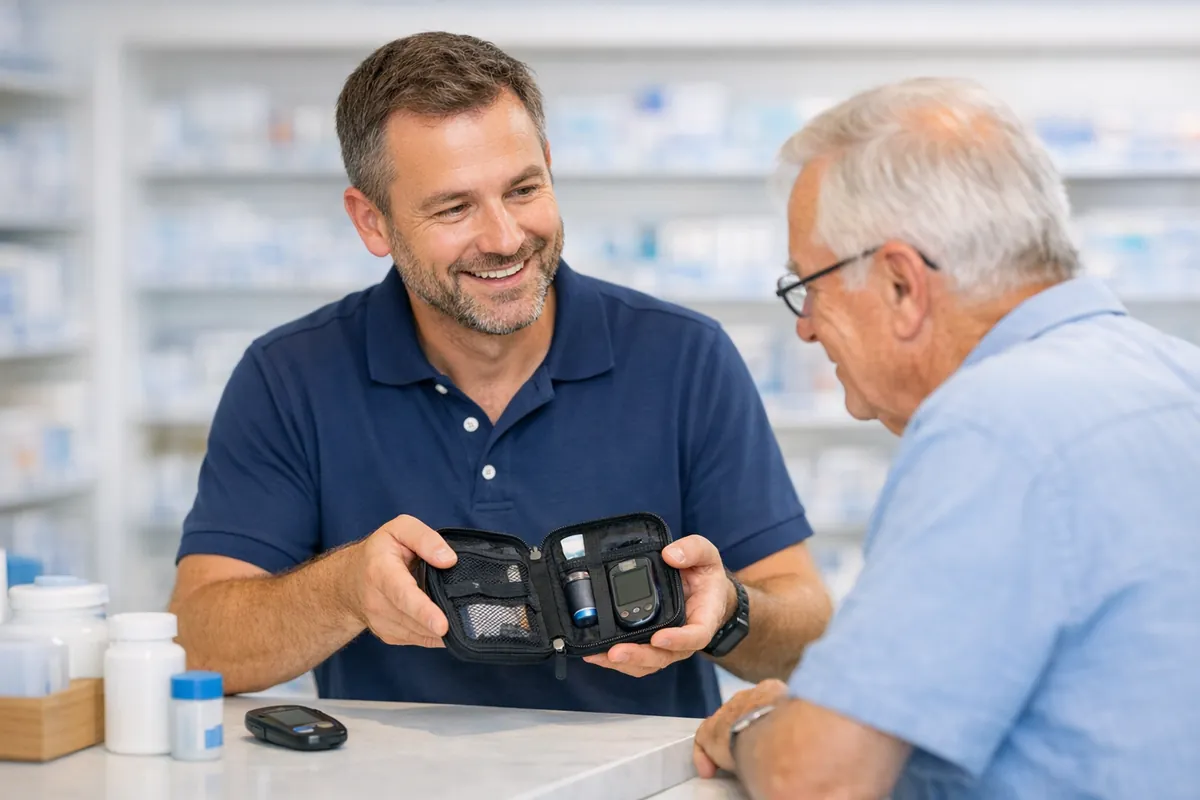
Storage needs are not the same for every item in a diabetes kit. Insulin, other injectable medicines, tablets, meters, test strips and sensors can each have their own temperature range, and some change once a pen or vial is opened. The leaflet or label that came with each product is the first place to look.1
Australian guidance generally says unopened insulin belongs in the fridge, in the door or a non-chilled section so it does not freeze, and never in the freezer. Insulin in use is usually kept at room temperature below 25°C. How long it can stay out of the fridge varies between products, so check your leaflet rather than relying on a single rule.2
Where heat catches supplies out
In a Queensland summer, a car can get hot enough to damage insulin and test strips within a short stop. Diabetes Australia advises never leaving medicines or strips in a hot car, and not packing them in checked luggage when you fly.3
- A parked car, including the glovebox and boot.
- A sunny windowsill, bench or outdoor table.
- A bag left on the sand, by the pool or in the sun at sport.
- Checked luggage on a plane.
Heat can also affect blood glucose meters, insulin pumps and glucose sensors. Ask your diabetes health professional how to use your particular device safely in hot weather.1
How to use an insulin cooler bag
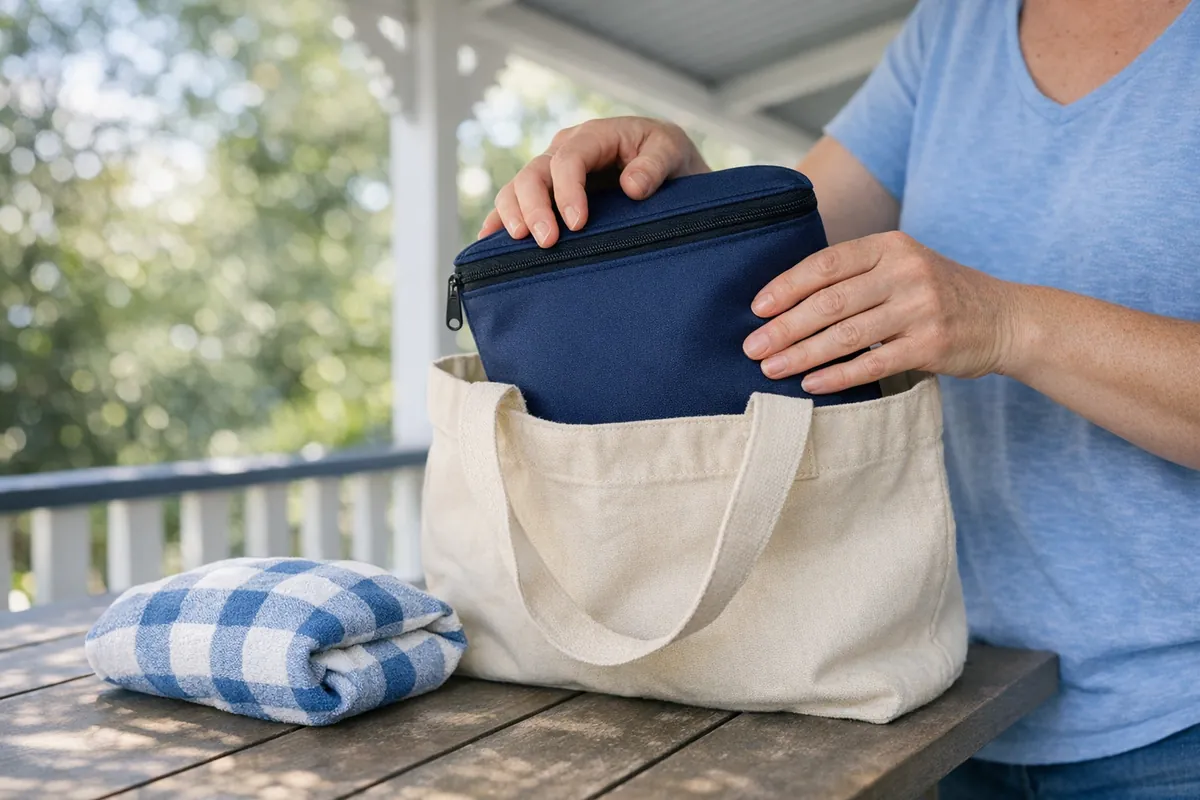
When you head out on a hot day, carry insulin in a cooler bag and keep the bag itself out of the car and out of direct sun.1 The aim is to keep insulin cool, not cold.
- Read both sets of instructionsFollow the directions for your insulin and for the cooler bag. An evaporative pouch, for example, needs to be soaked in cold water and drained before use, and re-soaked as directed.
- Keep insulin off the iceIf you use an esky or an ice brick, never put insulin directly against it. Leave it in its box or wrap it in a towel first.3
- Watch travel fridgesIn a caravan or camping fridge, keep insulin away from the freezer section and check the temperature stays above freezing.3
- Pack a small sharps containerTake one for days out and trips, so used needles and lancets have somewhere safe to go.4
A cooler bag and an organiser do different jobs. A travel case keeps supplies together and protected, but it does not control temperature unless it holds a cooling pouch.
Plan for storms and power cuts
Summer storms can cut the power, and with it the fridge. Queensland Health notes that medicines stored outside the temperature range on the manufacturer's label, including during a power outage, may become unsafe or unsuitable to use.6
- Know where your spare insulin is and how you would keep it cool if the power goes out.
- Keep a cooler bag or pouch ready to use.
- Have your prescriptions and care plan in one place you can grab quickly.
If insulin has been too hot or frozen
Do not rely on how insulin looks. Diabetes Australia advises not using insulin that has been frozen or exposed to high heat.5 If you are unsure, keep the product, check its leaflet and ask your pharmacist what to do before your next dose.
Cooler bags and travel cases we stock
Helpful for hot days and travel
 Glucology Cooler Bag Pen Pouch RedReusable evaporative cooling pouch, activated in cold water. Holds two standard insulin pens.View product →
 Glucology Diabetes Travel Case Plus BlackHard-shell organiser for a meter, pens, strips and lancets. Fits a Glucology cooling pouch; it does not cool on its own.View product →
Frequently asked questions
Can I put insulin in an esky with ice?
Does insulin I am using need to stay in the fridge?
Is a diabetes travel case the same as a cooler bag?
Ask us about storing your supplies
Bring your products or their leaflets to our Stafford pharmacy and our pharmacists can help you work out a storage plan for summer, travel or power cuts.
Visit us in StaffordShop diabetes travel accessoriesWritten by
SuperPharmacyPlus Pharmacist TeamRegistered pharmacists, SuperPharmacyPlus StaffordOur pharmacists work from our independent, locally owned pharmacy at 621 Stafford Road, Stafford, and support customers Australia-wide through our online shop.
References
- Your guide to managing diabetes when it's hot, National Diabetes Services Scheme (NDSS) (accessed 25 November 2026)
- Insulin and diabetes, healthdirect Australia (accessed 25 November 2026)
- Travelling well with diabetes, Diabetes Australia (accessed 25 November 2026)
- Safe summer fun, Diabetes Australia (accessed 25 November 2026)
- Diabetes quick guide: insulin, Diabetes Australia (accessed 25 November 2026)
- Medication safety in a disaster, Queensland Health (accessed 25 November 2026)
← Back to Health & Mobility Advice
This article is general information only and is not a substitute for advice from your pharmacist, doctor or other health professional about your own situation.
Recent Posts
-
Nov 25, 2026
Insulin Cooler Bags and Travel Cases: Summer Storage for Diabetes Supplies
An insulin cooler bag helps keep insulin out of the heat on hot days, but it works best as part of … -
 Nov 25, 2026
Choosing a Walking Frame: A Guide for Older Adults and Carers
Choosing a walking frame comes down to three things: how much support you need, where you will use … -
Nov 09, 2026
Can you use human shampoo on dogs?
For routine baths, choose a suitable dog-specific shampoo. The Australian Veterinary Association a …