Normal Saline vs Hypertonic Saline for Nebulisers: What's the Difference?
Jul 09, 2026 SuperPharmacyPlus Pharmacist

Normal Saline vs Hypertonic Saline for Nebulisers: What's the Difference?

For saline for nebuliser australia, normal saline (0.9%) hydrates airways and loosens mucus with minimal irritation. Hypertonic saline draws fluid into the airway through osmosis, thinning secretions more aggressively; consult a pharmacist for specific concentrations. For infants with acute bronchiolitis, nebulised hypertonic saline reduces hospital stay by nearly 10 hours. Lowers hospitalisation risk by 13% compared to normal saline. cite-1


What Is the Difference Between Normal and Hypertonic Saline?

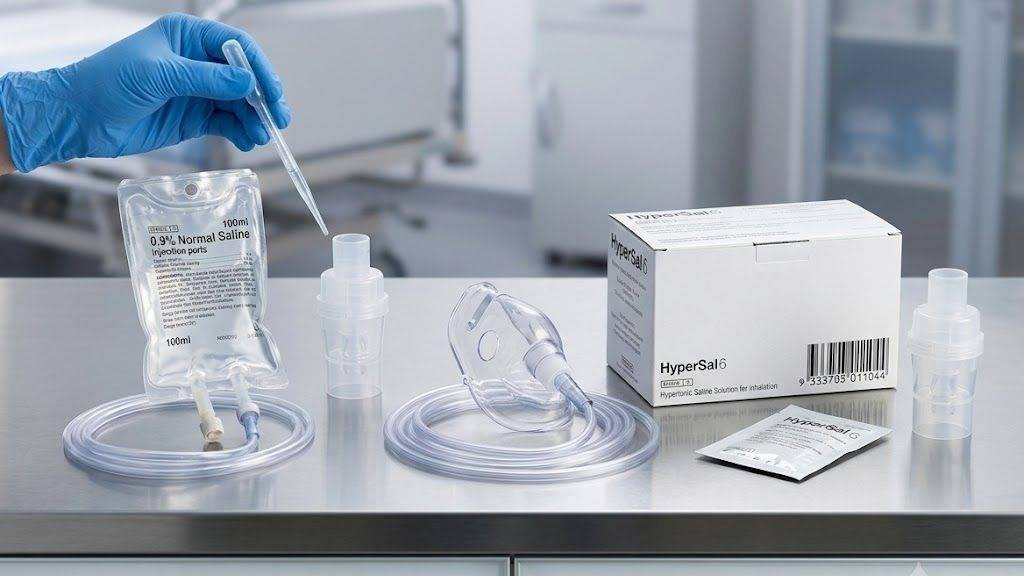
Normal saline solution contains a salt concentration of 0.9%, matching the body's natural fluid balance. Hypertonic saline solutions contain a higher concentration of sodium chloride than the body's own cells and fluids. Hypersal6, for example, contains sodium chloride 6% w/v — available as sterile, single-use 10mL sachets (box of 150 or single sachet). Consult a pharmacist for guidance on the right concentration for specific needs. cite-2

PropertyNormal Saline (0.9%)Hypertonic Saline (e.g. Hypersal6 — 6% w/v)
Salt concentration0.9%6% w/v (sodium chloride)
Matches body fluids?YesNo — higher concentration
Primary nebuliser useHydration, general airway moistureMucus clearance, airway hydration (cystic fibrosis, chronic lung disease)
The practical difference comes down to what each solution does once inhaled.

How Does Hypertonic Saline Clear Mucus?

Hypertonic saline works through osmosis. The higher salt concentration draws water from surrounding airway tissues into the mucus layer, thinning. Loosening thick secretions so the lungs expel them more easily. Normal saline does not produce this osmotic effect at the same intensity.

Which Saline Concentration Is Right for Nebuliser Use?

Choosing between an isotonic vs hypertonic solution for inhalation depends on the clinical goal. Customers seeking saline for nebuliser Australia should consult a pharmacist or healthcare provider before selecting a concentration. For those researching saline solution for nebuliser options, understanding the isotonic vs hypertonic saline distinction is the essential first step toward an informed decision.

Which Saline Type Is Right for Your Nebuliser?

Choosing the correct saline solution for nebuliser use depends on the clinical goal. Isotonic vs hypertonic solution for inhalation is not a matter of preference. Each concentration serves a distinct purpose, and selecting the wrong one means missing the therapeutic target entirely.
Feature0.9% Isotonic SalineHypersal6 — 6% w/v Hypertonic Saline
Salt concentration0.9% sodium chloride6% w/v sodium chloride
Primary purposeAirway hydration, medication deliveryMucus clearance, airway hydration
Mucus-thinning effectMinimalSignificant
Common use caseGeneral nebuliser therapyCystic fibrosis, chronic lung disease
FormatVariousSterile, single-use 10mL sachets (box of 150)
Adverse event riskVery lowLow; minor events resolve spontaneously

What does hypertonic saline actually do in the lungs?

Hypertonic saline for nebuliser therapy works by drawing water into the airway surface, thinning and loosening thick mucus so the lungs expel it more effectively. Hypersal6, which contains sodium chloride 6% w/v, harnesses this osmotic mechanism to deliver supplemental moisture and therapeutic salt particles deep into the lungs. It is presented in sterile, single-use 10mL sachets — each containing the full dose needed per treatment. This is why hypertonic concentrations such as Hypersal6 are used for conditions involving heavy mucus burden — cystic fibrosis and chronic lung disease — rather than simple airway dryness.

Is hypertonic saline safer than normal saline for children?

Research into 0.9% saline vs hypertonic saline in paediatric bronchiolitis shows nebulised hypertonic saline (as a class, per Cochrane evidence) reduces hospital stay by nearly 10 hours and lowers hospitalisation risk by 13% among outpatient and emergency-department children. Note that Hypersal6 is indicated for cystic fibrosis and chronic lung disease — not bronchiolitis specifically. Minor adverse events — including temporary cough, agitation, and bronchospasm — resolve on their own without intervention. Caregivers sourcing saline for nebuliser Australia-wide should consult a pharmacist or prescriber before selecting a concentration for paediatric use.

Where Can You Get Expert Nebuliser Saline Advice in Australia?

SuperPharmacyPlus has been serving the Stafford community for more than 40 years, making the pharmacy one of Australia's most established sources of clinical guidance on respiratory health and chronic condition management. Customers seeking advice on saline for nebuliser Australia. Whether for themselves or a family member — can access pharmacist support both in-store and online.

Does SuperPharmacyPlus Help Customers Outside Queensland?

SuperPharmacyPlus operates a national e-commerce platform that delivers respiratory and medical products Australia-wide. Customers in regional or remote areas who need a saline solution for nebuliser can order online. Receive products directly to their door. Distance is not a barrier to accessing quality clinical guidance.

How Can Customers Reach SuperPharmacyPlus Directly?

The Stafford store is open seven days a week, from 7am to 8pm. Hours that accommodate early-morning and after-work queries alike. Customers can visit in person at the Stafford store or call the pharmacy directly.

Key ways to connect with SuperPharmacyPlus:

1: Phone advice available seven days

2: In-store consultation at the Stafford, QLD location

3: Online ordering with national delivery for respiratory and medical products


Frequently Asked Questions


Can I use hypertonic saline in any nebuliser, or do I need a specific device?

Hypertonic saline such as Hypersal6 (sodium chloride 6% w/v) is designed for use with a nebuliser that produces an aerosol fine enough to reach the lower airways. Not all nebulisers are equally suited — mesh and jet nebulisers are commonly recommended for hypertonic saline therapy in conditions like cystic fibrosis and chronic lung disease. Before starting treatment, patients should confirm with their pharmacist or prescriber that their nebuliser model is compatible with hypertonic saline and delivers the correct particle size for effective deep-lung deposition.

What concentration of hypertonic saline is used for cystic fibrosis?

For cystic fibrosis, hypertonic saline is typically used at higher concentrations than normal saline, with 6% w/v — such as Hypersal6 — being a commonly indicated option. The elevated sodium chloride concentration works via osmosis to draw water into the airway surface, thinning the thick, sticky mucus that characterises cystic fibrosis and making it easier to clear from the lungs. Patients should always follow the concentration prescribed or recommended by their respiratory specialist or pharmacist, as the right dose depends on individual clinical circumstances and disease severity.

Is hypertonic saline safe to use every day for chronic lung disease?

Hypertonic saline is indicated for ongoing use in chronic lung disease, and Hypersal6 sterile single-use 10 mL sachets are formulated to support regular nebuliser therapy. Minor adverse events — including temporary cough, brief agitation, and bronchospasm — are recognised but typically resolve on their own without intervention. Because tolerance and frequency of use depend on individual respiratory status, patients should follow a healthcare professional's guidance on how often to use hypertonic saline. A pharmacist can advise on whether daily use is appropriate and what to monitor during ongoing treatment.

What is the difference between isotonic and hypertonic saline for inhalation therapy?

Isotonic saline (0.9% sodium chloride) matches the salt concentration of the body's own cells and fluids, making it gentle on airway tissue and well suited to general airway hydration and medication delivery during nebuliser therapy. Hypertonic saline — such as Hypersal6 at 6% w/v — contains a significantly higher sodium chloride concentration than the body's natural fluids, creating an osmotic gradient that draws water into the airway surface. This additional fluid thins and loosens thick mucus, making hypertonic saline the appropriate choice when the clinical goal is active mucus clearance rather than simple moisture replacement.

How do I use Hypersal6 saline sachets in a nebuliser?

Hypersal6 is presented in sterile, preservative-free, single-use 10 mL sachets, each containing the full dose needed for one treatment session. Each sachet features an alternative ampoule nozzle to assist with pouring the solution into the nebuliser cup. Typical dosage guidance is one to two treatments per day, or as directed by a doctor; the solution can also be diluted with sterile water if a weaker concentration is required. Once the sachet is opened it should be used immediately and any unused portion discarded, as single-use packaging ensures sterility for every treatment.

Why is hypertonic saline prescribed for bronchiectasis?

Bronchiectasis involves permanently widened, damaged airways that struggle to clear mucus effectively, leading to repeated infections and declining lung function. Hypertonic saline nebuliser therapy addresses this by harnessing osmosis — the elevated sodium chloride concentration draws water into the airway surface liquid, rehydrating and thinning the thick mucus that accumulates in bronchiectatic airways. Regular clearance of this mucus reduces the bacterial load in the lungs and can help lower the frequency of exacerbations. Patients with bronchiectasis should work with their respiratory specialist to determine the appropriate saline concentration, frequency, and whether to combine nebulised saline with airway clearance physiotherapy.

Where can I buy hypertonic saline solution for nebulisers in Australia?

Hypertonic saline solutions such as Hypersal6 (sodium chloride 6% w/v, sterile single-use 10 mL sachets) are available through SuperPharmacyPlus, one of Australia's most established community pharmacies with more than 40 years serving the Stafford, Queensland community. A pharmacist is available both in-store and online to advise on the right saline concentration for individual respiratory needs.

Conclusion

Choosing between normal saline (0.9% sodium chloride) and hypertonic saline for nebuliser therapy comes down to the clinical goal: airway hydration and medication delivery favour isotonic saline, while active mucus clearance in conditions such as cystic fibrosis, chronic lung disease, and bronchiectasis calls for a higher concentration such as Hypersal6 (sodium chloride 6% w/v). The osmotic mechanism that makes hypertonic saline effective — drawing water into the airway surface to thin and loosen thick secretions — also means concentration selection matters; the wrong choice means missing the therapeutic target entirely. Evidence from Cochrane research further supports nebulised hypertonic saline's role in paediatric bronchiolitis, where it reduces hospital stays by nearly 10 hours and lowers hospitalisation risk by 13% compared to normal saline. Patients and caregivers seeking the right saline solution for their nebuliser should consult a pharmacist at SuperPharmacyPlus for personalised guidance on concentration, device compatibility, and treatment frequency.
Jul 09, 2026 SuperPharmacyPlus Pharmacist

Recent Posts

Micro-Plush Waterproof Pillow Protector

Join Our Newsletter

Subscribe now to receive the latest updates, exclusive offers, and insights directly to your inbox.