- Product
- Qty in Cart
- Quantity
- Price
-
On Sale
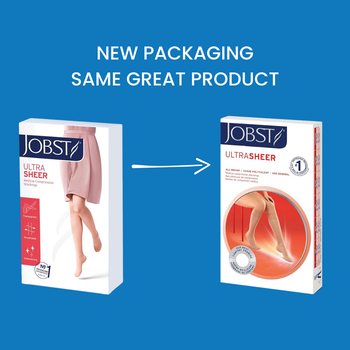 Product updateThe Pattern colour has been discontinued. Please select an available Natural or Black option instead. As the sheerest compression stocking in its class, JOBST® UltraSheer is fashion and...Now: $84.95$99.95
-
On Sale
 Product updateThe earlier Black Small (78649-00), Medium (78649-01) and Large (78649-02) order codes have been discontinued. Their updated supplier codes are 75339-20, 75340-20 and 75341-20...Now: $68.50$69.95
-
On Sale
 Now: $89.95$99.95
-
On Sale
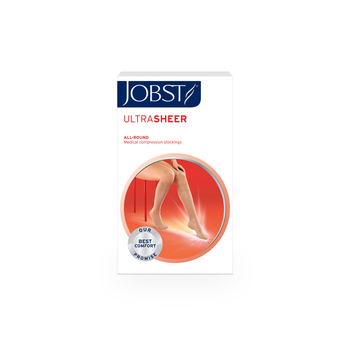 As the sheerest compression stocking in its class, JOBST® UltraSheer is fashion and efficiency all rolled into one whilst offering light weight, comfortable and highly effective leg support. The...Now: $59.95$69.95
-
On Sale
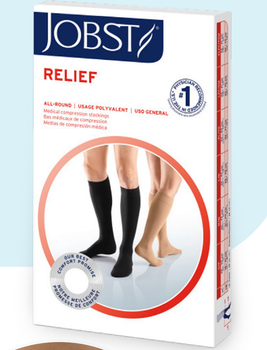 Jobst Relief 20-30mmHg Knee High | Closed Toe ** Please Note** In order to supply this compression (20-30mmHg) a prescription or letter is required from your doctor. Description JOBST® Relief...Now: $89.95$99.95
-
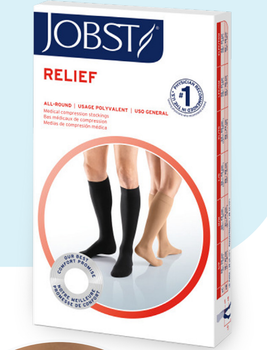 JOBST® Relief delivers the certainty of graduated sustained compression therapy. The range consists of classical therapeutic stockings that offer durability and comfort in a wide range of style...$69.95
FAQs
Compression stockings for legs should feel snug but not painful. They apply gentle graduated pressure — firm enough to aid circulation but still comfortable enough for daily wear. Proper sizing is also essential. Stockings that are too small can feel restrictive, while those that are too loose won’t provide the intended benefits.
Most garments are sized by ankle, calf and sometimes thigh measurements rather than shoe size alone. However, measuring can be tricky and mistakes are common; it’s best to have your sizing checked by a professional to make sure your leg compression sleeves fit properly and work as intended.
Most people wear their leg compression sleeves during the day — whether at work, while travelling or during recovery from surgery — and remove them at night. They can be worn for several hours at a time, but it’s best to follow the guidance provided with your garment or from your healthcare provider. Regular daytime use helps maintain circulation and reduce discomfort.
Compression knee socks cover the foot and calf up to just below the knee. They’re one of the most popular options for daily support, while thigh-high or full-length garments provide more extensive coverage when needed.
Compression socks do not prevent leg cramps, but they may help some people manage them more comfortably. By supporting healthy circulation and providing gentle muscle support, compression socks can ease the tightness and fatigue that often contribute to cramping. Many people find them useful during long periods of standing, after physical activity or at night when cramps can be more disruptive.